
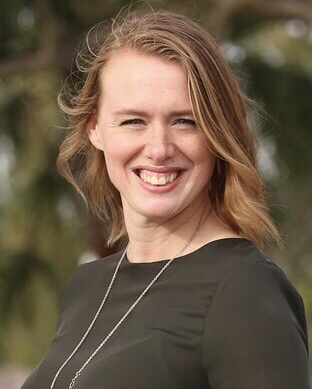
Professeure adjointe
Coordonnées (recherche)
Centre de recherche interdisciplinaire en réadaptation (CRIR)
Site Institut de réadaptation Gingras-Lindsay de Montréal
6300 avenue Darlington,
Montréal, Québec, H3S 2J4
Coordonnées (École)
T 514 343-6111, poste 30897
marika.demers@umontreal.ca
Programme
Ergothérapie
Formation
- B. Sc. Ergothérapie, Université de Montréal (2008)
- M. Sc. Sciences de la réadaptation, Université McGill (2014)
- Ph. D. Sciences de la réadaptation, Université McGill (2019)
- Post-doctorat, Division de Biokinésiologie et Physiothérapie, University of Southern California (2019-2022)
Principaux projets en cours
- Développement d’une version dansée du programme GRASP
- Un entrainement au piano pour mieux composer avec la sclérose en plaques
- Exosquelette robotisé souple pour la réadaptation sensorimotrice de la main après un accident vasculaire cérébral (AVC)
- Utilisation de capteurs inertiels pour l’évaluation et le traitement des atteintes motrices du membre supérieur après un AVC
- Le Programme CIME membres supérieurs : Développement et implantation d’une Clinique d’Intensification et de neuromodulation pour les individus ayant une lésion de la Moelle Épinière
Publications choisies
- Cain A, Gunby T, Winstein C, Demers M. (2025) Integration of wearable technology into stroke rehabilitation: rehabilitation researchers’ perspectives. Disability and Rehabilitation : Assistive Technology. 20(5) : 1460-1469 Doi : 10.1080/17483107.2025.2459326
- Demers M, Charalambous M, Kwah LK, Thilarajah S, Bazadona D, Chapman S, Nasreldein A, Yperzeele L, Amoah D, Winstein C, Bernhardt J, Gopaul U. (2025) The unique needs and challenges experienced by young people with stroke: an international qualitative analysis. Neurology: Clinical Practice. 15(1):e200406. doi: 10.1212/CPJ.0000000000200406.
- Demers M, Bishop L, Cain A, Saba J, Rowe J, Zondervan D, Winstein C. (2024) Wearable technology to capture arm use of stroke survivors in home and community settings: feasibility and insights on motor performance. Phys Ther (PTJ). 104(2):pzad172. DOI: 10.1093/ptj/pzad172.
- Demers M, Cain A, Bishop L, Gunby T, Rowe J, Zondervan D, Winstein C. (2023) Understanding preferences of stroke survivors for feedback provision about functional movement behavior from wearable sensors: a mixed-methods study. J Neuroeng Rehabil. 20: 146. DOI: 10.21203/rs.3.rs-2789807/v1
- Demers M, Varhese R, Winstein C. (2022) Retrospective Analysis of Task-Specific Effects on Brain Activity after Stroke. Frontiers in Human Neuroscience, section Motor Neuroscience. 16: 871239. doi : 10.3389/fnhum.2022.871239.
- Levin MF, Demers M (2021). Motor learning in neurological rehabilitation. Disabil Rehabil 2021; 43(24):3445-3453 doi: 10.1080/09638288.2020.1752317
Orientation des recherches
- Évaluation des membres supérieurs
- Mécanismes sous-jacents à la récupération motrice après un AVC
- Interventions à l’aide d’approches innovantes en réadaptation
- Nouvelles technologies en réadaptation
- Accident vasculaire cérébral